Zero waste: Forgotten Fish Species – Unforgettable Flavours
Blue Economy
The blue economy encompasses the sustainable use of ocean, sea, and coastal resources for economic growth, improved livelihoods, and jobs, while preserving the health of marine ecosystems. It entails nature-based innovations, ecological sustainability, and profitability, and is often associated with the concept popularized by Gunter Pauli.
Key aspects of the blue economy include:
- Sustainability: Active improvement of ocean health through ecologically sustainable economic activities.
- Innovation: Development of new technologies and business models inspired by nature (e.g. mimicking ecosystems).
- Sectors: Shipping, fishing, aquaculture, marine renewable energy (wind farms, wave energy), coastal tourism, and biotechnology.
- Goal: Transitioning from a 'business-as-usual' model to sustainable development that balances growth, employment, and environmental protection.
Competitiveness consists of exploiting and optimizing inherent virtues and values that connect untapped local potential. Like a natural ecosystem, where the seed lies fallow to sprout with incredible force at the first rain, releasing joy and happiness when spirit-filled living conditions merge in balance and harmony.
Innovative business models are capable of bringing competitive products and services to the market that meet basic needs, while simultaneously creating social capital and improving conscious living in harmony with nature.
The blue economy satisfies the basic needs of all with what we have, introducing innovations inspired by nature, creating multiple benefits, including jobs and social capital, while offering more with less. Drawing inspiration from the nature that surrounds us to take only what is necessary, striving to function in symbiosis with living beings, coexisting on the planet in accordance with its ecosystems. This is what the blue economy offers you - a new approach to everyday life that encourages regeneration, self-sufficiency, and abundance, improving everyone's relationship with their environment and fostering harmonious coexistence among people.
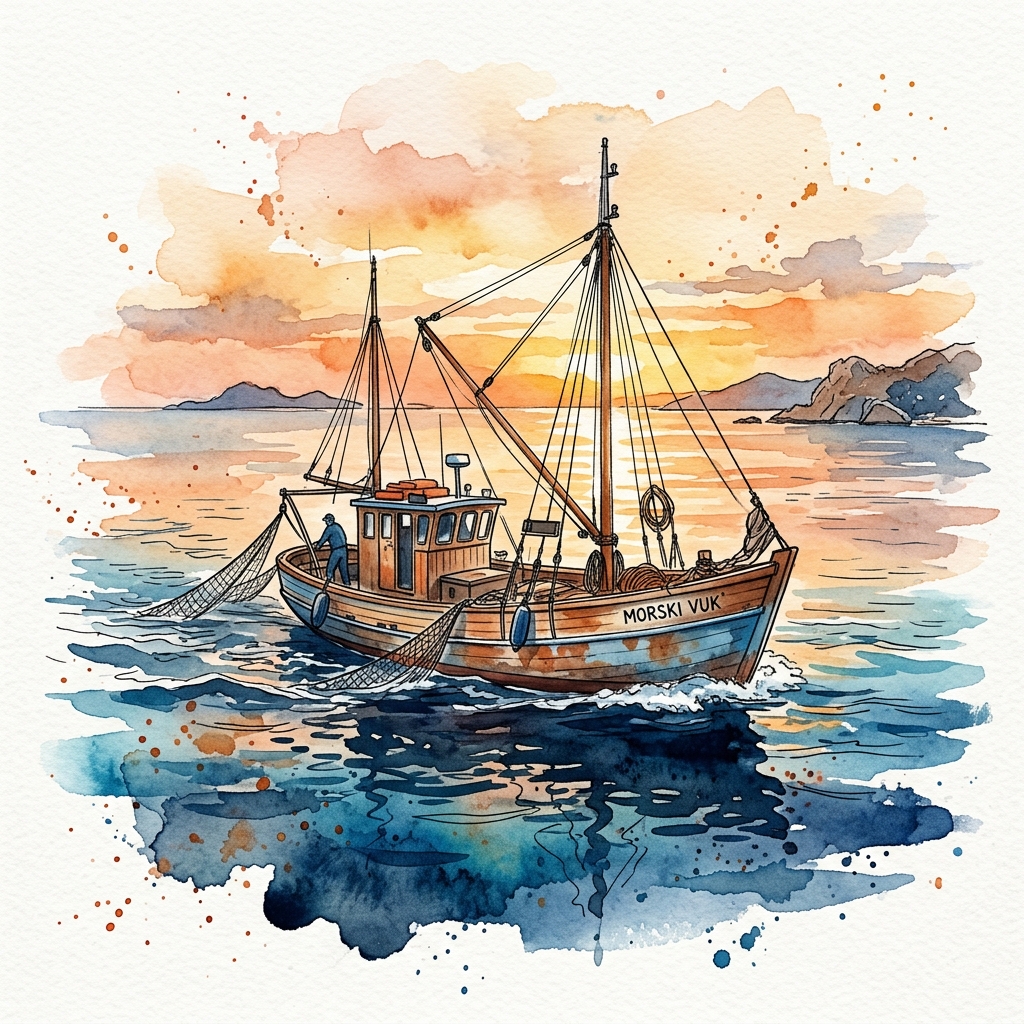
Bottom trawling is one of the most important forms of commercial fishing in the Adriatic Sea, especially in its central part. Trawling is a fishing technique in which a special net—a trawl—is dragged along the seabed or through the mid-water layers by a fishing vessel. This method allows the capture of a large number of different fish species and other marine organisms, thereby achieving exceptional catch diversity. Trawls are most commonly used on sandy and muddy seabeds, inhabited by numerous species of fish, crustaceans, and cephalopods. Because of this, trawler catches are often highly diverse. Alongside highly prized fish species, nets contain lesser-known but nutritionally valuable species that are often considered less attractive for the market. In the context of sustainable fishing and a zero-waste approach, these species represent an important resource because they enable better utilization of the catch and waste reduction.
A special place in the catch is occupied by blue fish, which is typical of the Adriatic Sea. The blue fish group includes species such as European pilchard (sardine), chub mackerel, chub/Atlantic mackerel, and Atlantic bonito, which are known for their availability, nutritional value, and importance in the traditional diet of coastal regions. For centuries, these species were the foundation of the coastal population's diet, and today they are gaining importance once again in the context of a healthy and sustainable diet. Blue fish is exceptionally rich in high-quality proteins, vitamins, and minerals, as well as omega-3 fatty acids, which have numerous health benefits.
Omega-3 fatty acids contribute to the proper development of the brain and nervous system, which is particularly important for children and young people during periods of growth and learning. Regular consumption of blue fish is associated with better concentration, memory development, and a reduced risk of cardiovascular diseases in later life. In addition to contributing to health, blue fish plays an important role in preserving the environment. Due to its abundance and rapid growth, it is considered a more sustainable choice compared to some other fish species. By including less popular and often neglected species from trawler catches in our daily diet, pressure on the most sought-after species is reduced, fostering a more responsible relationship with marine resources.
For younger generations, becoming familiar with catch diversity and the nutritional values of blue fish represents a crucial step towards developing healthy eating habits. At the same time, it raises awareness of the importance of preserving the sea and responsibly using its wealth. It is precisely through education, creativity, and the application of zero-waste principles that we can ensure that the ocean's bounty remains available to future generations.
Project Trademark
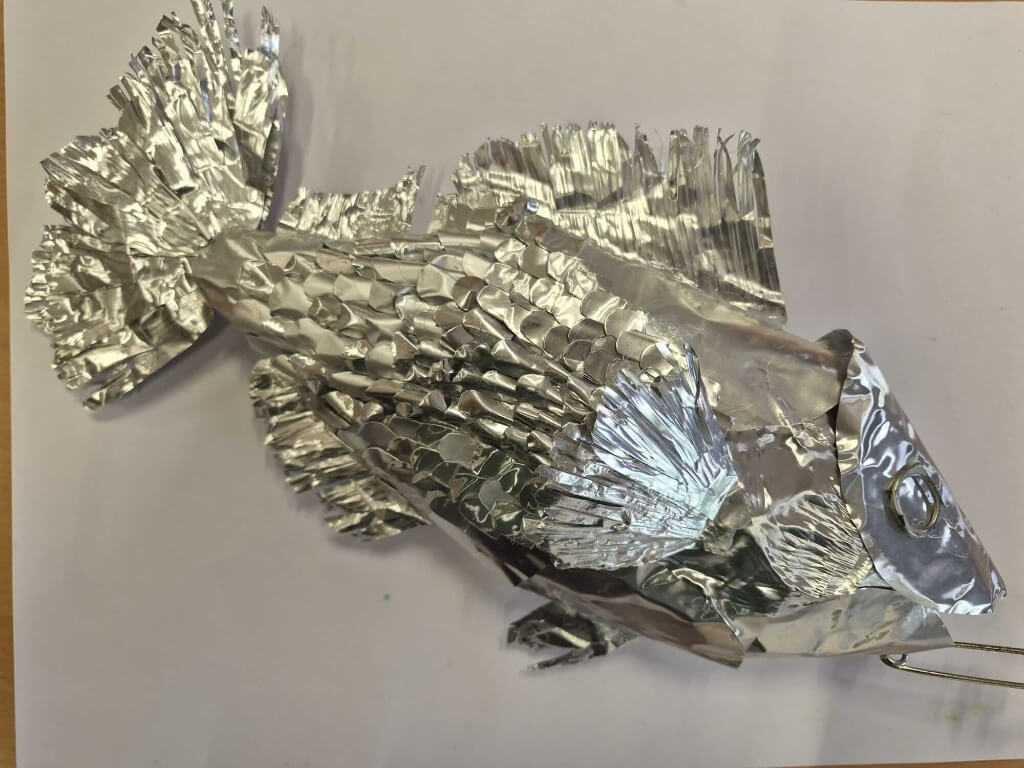
This exceptional fish sculpture, made entirely of recycled materials and aluminum foil, is the work of primary school student Nina Slavić and represents the **official project trademark**. This artwork symbolizes the brilliance and fragility of Adriatic life, conveying a strong ecological message about the importance of waste reduction (zero waste) and the preservation of our marine wealth through creative artistic expression.